Source Dental Mixing Cup for Preventive Care and Prosthesis
Find 30 dental mixing cup options from Chinese manufacturers. Compare silicone rubber bowls and disposable dishes for preventive health care, maxillofacial prosthesis, and plaster mixing. Check CE-certified models and MOQs; compare the available evidence and request quotations based on your requirements.
Key considerations
Products List






Comprehensive Sourcing Guide
Dental Mixing Cup Sourcing Guide
Procurement professionals must first distinguish between the specific variants of dental mixing cups available in the current market, as the product scope extends beyond simple containers to include specialized bowls and disposable dishes. The observed listings reveal a diverse range of models, such as the U8877 and U8864, which are explicitly categorized as specialized or shared instrument equipment depending on their intended clinical workflow. Buyers should note that while some units are designed for general preventive health care, others are specifically engineered for maxillofacial prosthesis materials, requiring distinct material properties and structural integrity.
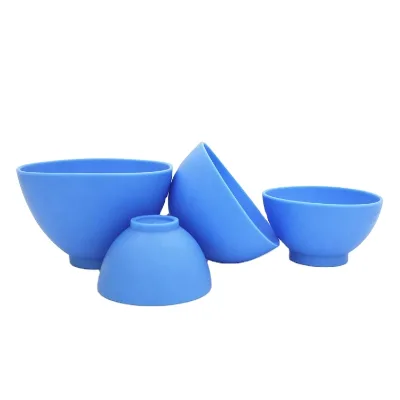
When evaluating product scope, it is critical to verify the physical characteristics and packaging configurations that align with your clinic's operational needs. The market offers cups in various colors, including clear blue, black, and pink, which may serve as visual indicators for different material types or sterilization cycles. Furthermore, packaging standards vary significantly, with some suppliers offering 180 pieces per carton while others provide 50 pieces per bag, directly impacting storage efficiency and inventory management strategies for dental departments.
Technical Specifications to Verify
Buyers must rigorously verify the dimensional and material specifications to ensure compatibility with their mixing instruments and the specific viscosity of dental materials. The available data indicates that models like the TOPMB series come in large, medium, and small sizes, while the TOP-DS195 model has precise dimensions of 195 by 32 by 7 millimeters. It is essential to confirm that the selected cup's shape, typically a bowl, and its softness characteristics match the mechanical requirements of your mixing spatulas to prevent material slippage or inaccurate dosing during procedures.
Material composition and shelf life are equally critical technical factors that influence the longevity and safety of the mixing process. Most observed products are constructed from silicone rubber, a material chosen for its chemical resistance and flexibility, yet buyers must confirm the specific grade to ensure it does not react with investment materials or plaster. Additionally, the documented shelf life of three years for certain models provides a baseline for inventory planning, but procurement teams should always request batch-specific stability data to guarantee performance throughout the storage period.
Compliance and Safety Documentation
Ensuring regulatory compliance is a non-negotiable step when sourcing dental mixing cups, as these items often fall under Class I instrument classification and require specific safety certifications. The market data confirms that many suppliers provide CE certification, which is a mandatory requirement for medical devices entering the European market, and some listings also reference FDA standards. Buyers must demand valid certification documents for every batch purchased to verify that the products meet the rigorous safety and quality standards required for clinical use in dental departments.
Beyond general certifications, procurement teams must scrutinize the specific product standards and origin details to mitigate supply chain risks. The observed listings indicate origins in regions such as Hebei and Anqing in China, which necessitates a thorough review of the manufacturer's quality management systems. It is vital to confirm that the product standard, whether listed as CE or FDA, applies specifically to the model number being ordered, as generic certifications may not cover all variations in the product line, particularly those used for specialized applications like maxillofacial prosthesis.
Cost Drivers and Commercial Terms
Understanding the cost drivers for dental mixing cups requires an analysis of the minimum order quantities and packaging configurations that influence the unit price. The observed market shows a wide range of MOQs, from as low as 20 pieces to as high as 2,500 pieces, which directly impacts the initial capital outlay for procurement. Buyers should calculate the total cost of ownership by factoring in the packaging density, such as 25 bags per case or 16 bags per carton, to determine the most economical order size that balances inventory holding costs with cash flow requirements.
Commercial terms regarding customization and branding also play a significant role in the final pricing structure of these medical supplies. While some suppliers offer logo printing services, others explicitly state that their products come without logo printing, which can affect the perceived value and branding opportunities for dental practices. Procurement managers must clarify whether customization is available for specific model numbers like the U8877 and negotiate terms that align with their budget constraints, ensuring that any additional fees for branding or special packaging are transparently disclosed before finalizing the purchase.
Supplier Qualification and Quality Control
Supplier qualification should focus on verifying the manufacturer's ability to maintain consistent quality across different product lines and model numbers. The observed listings include various models such as the AX-Cup and TOPMB series, suggesting that suppliers may have diverse production capabilities. Buyers must assess whether the supplier can consistently deliver products that meet the specified material standards, such as silicone rubber, and ensure that the production origin, whether Hebei or Anqing, adheres to the same quality control protocols for every batch.
Quality control procedures must extend to the packaging and labeling accuracy to prevent errors in clinical settings. The data indicates that packaging varies from paper boxes to bulk cartons, and it is essential to verify that the labeling accurately reflects the product nature, such as whether it is a specialized or shared instrument equipment. Procurement teams should request samples to inspect the physical condition of the cups, checking for defects in the softness or shape, and confirm that the after-sale service, including online technical support, is readily available to address any quality issues that arise post-delivery.
Long-Term Procurement Checks
Establishing a long-term procurement strategy requires regular audits of supplier performance and product consistency over time. Buyers should implement a schedule to re-verify the CE certification and other compliance documents for each new shipment, as regulatory requirements can change and supplier documentation may become outdated. It is also prudent to monitor the shelf life of the inventory on hand, ensuring that the three-year lifespan of the silicone rubber cups is respected to prevent the use of degraded materials in patient care.
Continuous evaluation of the product range and market trends is necessary to maintain a competitive edge in dental supply management. As the market offers a variety of colors and models, procurement teams should periodically review whether the current selection still meets the evolving needs of the dental department, such as the shift toward specific preventive health care materials. By maintaining open communication channels with suppliers and tracking usage patterns, buyers can anticipate demand fluctuations and adjust their ordering strategies to ensure a reliable supply of high-quality mixing cups.
FAQs
What materials are used for dental mixing cups?
Dental mixing cups are primarily manufactured from silicone rubber, ensuring flexibility and durability during clinical use. This material choice supports their function as specialized instrument equipment for dental departments. The soft nature of the silicone allows for easy handling and cleaning, making it suitable for both disposable and shared instrument applications in preventive health care settings.
Can dental mixing cups be customized with logos?
Customization options are available for dental mixing cups, allowing for specific branding needs. However, some product listings indicate configurations without logo printing, depending on the supplier's standard offerings. Buyers should verify customization capabilities directly with manufacturers, as availability may vary based on order volume and specific model requirements like the U8877 or TOPMB series.
What certifications do dental mixing cups typically hold?
Many dental mixing cups hold CE certification, indicating compliance with European health, safety, and environmental protection standards. Some products may also reference FDA standards or be classified as Class I instruments. These certifications ensure the materials are safe for use in dental preventive health care and maxillofacial prosthesis applications, providing assurance for clinical environments.
What are the common packaging formats for these cups?
Packaging varies by model, with options including paper boxes, bags, and cartons. For instance, some items are packed as 200 pieces per bag with 25 bags per case, while others use 100 pieces per carton. Specific models like the TOPMB series may come in 50-piece bags with 16 bags per carton, ensuring efficient storage and distribution for dental practices.
What colors are available for dental mixing cups?
Dental mixing cups are available in various colors to aid in material identification. Common options include clear blue, clear red, black, blue, pink, white, yellow, and green. Specific models may offer deep blue, light red, or light green variants. These color distinctions help dental professionals quickly differentiate between mixing materials during procedures, enhancing workflow efficiency.
What is the typical shelf life of dental mixing cups?
The shelf life for dental mixing cups is typically three years, ensuring long-term usability for storage. This duration applies to the silicone rubber material, maintaining its integrity and softness over time. Buyers should check specific product listings for exact shelf life details, as variations may exist between different manufacturers and models, such as the AX-Cup or U8864 series.